





News & Updates
Latest Factory Trends, New Product Releases & Global Auto Parts Industry Insights
Custom Starter Motor vs Standard Models: Which Option Fits Your Equipment?
Custom Starter Motor or Standard Model: Where Does the Real Difference Show?
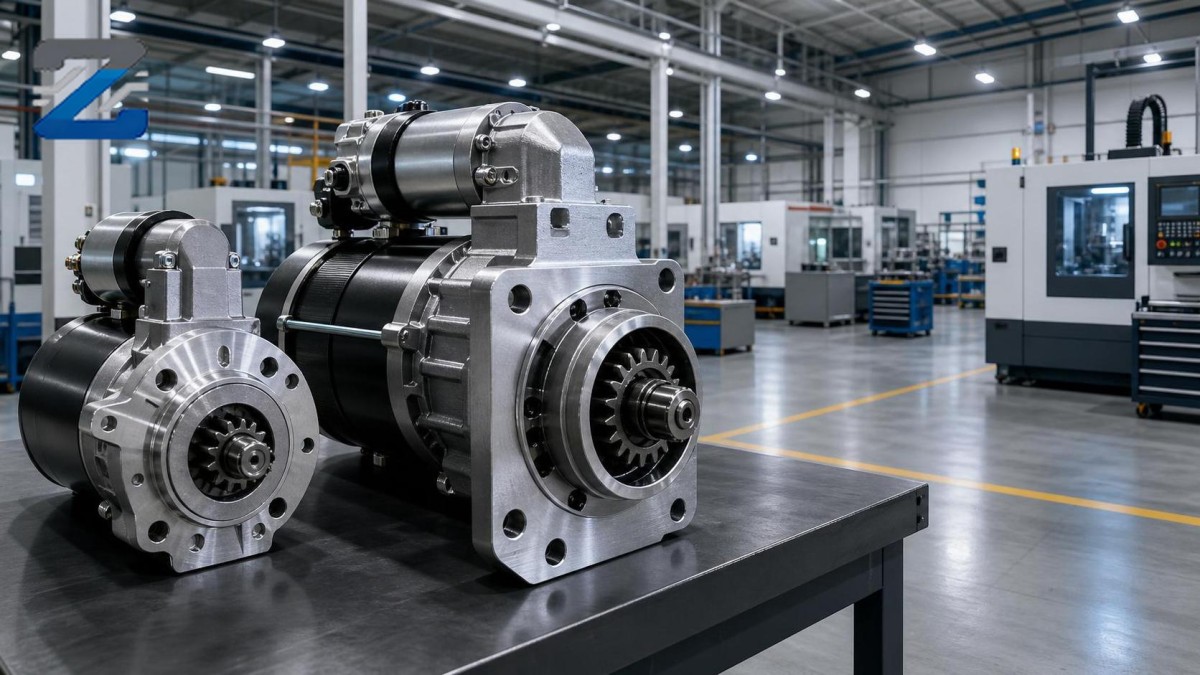
Choosing the right starter motor affects more than initial price. It influences cold-start reliability, maintenance intervals, inventory planning, and delivery stability across demanding equipment fleets.
In construction machinery, tractors, and heavy-duty vehicles, the better option depends on load profile, installation limits, voltage requirements, and sourcing strategy. That is where the custom starter motor question becomes practical, not theoretical.
When does a custom starter motor make more sense?
A standard model usually works well when equipment follows common engine platforms and operating conditions stay predictable. It is faster to approve and easier to reorder.
A custom starter motor becomes valuable when the application has non-standard mounting space, torque demand, gear engagement requirements, or harsh duty cycles.
- Frequent cold starts in low-temperature regions
- Heavy vibration from off-road construction use
- Agricultural machines with seasonal but intense operating hours
- Commercial vehicles needing compatibility with legacy engine layouts
In these cases, choosing a custom starter motor can reduce repeat failures that standard catalog models cannot fully address.
Is the lower price of a standard model always the better decision?
Not always. A standard unit may cost less at purchase, but lifecycle cost can rise if starting performance is marginal or replacement frequency increases.
A custom starter motor often costs more upfront because of engineering review, tooling adjustment, or validation. Still, the total cost may be lower when downtime is expensive.
A simple comparison table helps clarify the decision.
What should be checked before selecting either option?
The common mistake is choosing by reference number alone. In real applications, fitment and electrical performance need equal attention.
- Starting torque under real load
- Voltage and power rating
- Mounting dimensions and pinion data
- Dust, heat, moisture, and vibration exposure
- Target order volume and replenishment cycle
More mature suppliers can shorten this evaluation because they already hold broad model coverage and verified production capability, from die-casting and CNC processing to winding and final assembly.
How do supply capacity and engineering depth affect the choice?
This point is often overlooked. A custom starter motor is only useful when the supplier can move from design to stable mass production without quality drift.
For buyers managing multi-market equipment, supply continuity matters as much as technical fit. A factory with automated lines, controlled processes, and large annual capacity can usually support both standard orders and customized programs more reliably.
That matters especially when one platform must serve several regions, or when replacement demand continues long after the original project launch.
So which option fits your equipment better?
If your machine uses a common engine configuration and operating conditions are moderate, a standard model is usually the efficient choice.
If installation space is tight, start-up load is high, or field failures carry major cost, a custom starter motor is often the better long-term decision.
The most practical next step is to compare real operating data, fitment details, annual demand, and replacement risk side by side. That makes the custom starter motor decision far clearer than price alone.