





News & Updates
Latest Factory Trends, New Product Releases & Global Auto Parts Industry Insights
What Is a Starter Motor and How Does It Work in Diesel Engines?
A starter motor is the electric unit that turns a diesel engine from rest to combustion. In heavy equipment, that first rotation matters because diesel compression is high, load conditions are harsh, and failed starts quickly affect uptime, maintenance planning, and operating cost.
How a starter motor brings a diesel engine to life
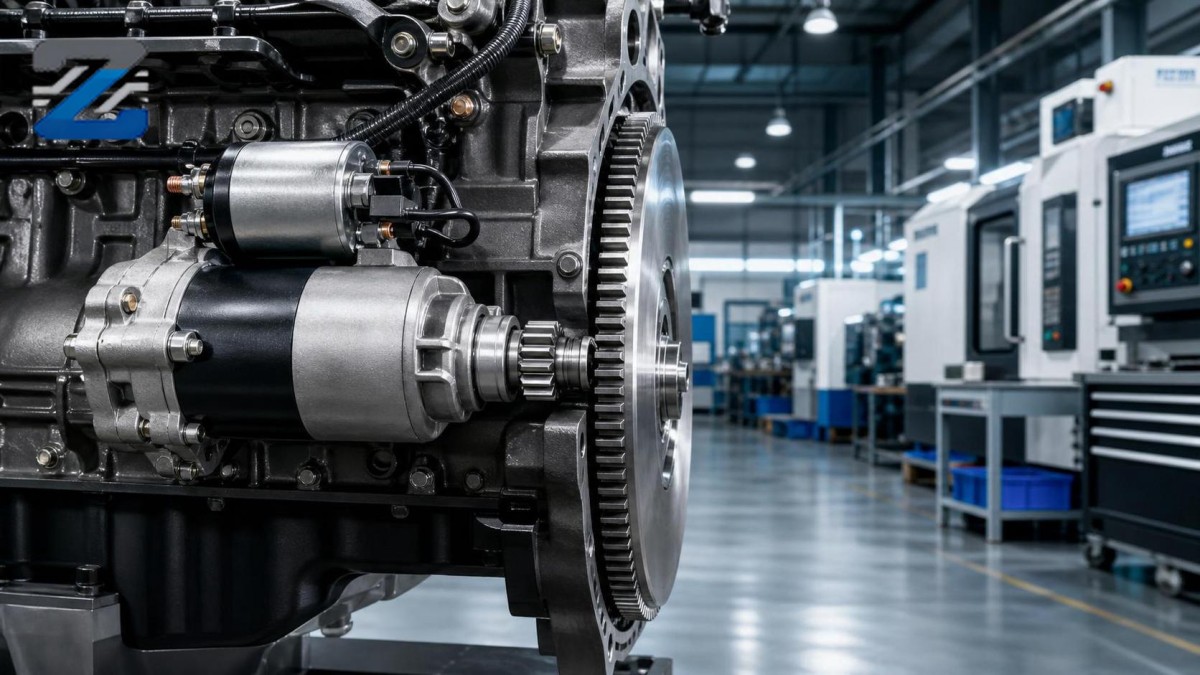
At the moment of starting, battery power flows to the solenoid. The solenoid pushes the pinion gear forward and closes the main electrical circuit inside the starter motor.
The motor then spins the pinion, which meshes with the flywheel ring gear. That motion cranks the crankshaft fast enough for fuel injection, compression heat, and ignition to take over.
Once the engine fires, the pinion disengages. This prevents overspeed damage and allows the diesel engine to run under its own power.
Core parts that shape performance
A diesel starter motor looks simple from outside, but its reliability depends on several tightly matched parts.
- Solenoid: engages the pinion and switches high current.
- Armature and field system: create the torque needed for cranking.
- Pinion and overrunning clutch: transfer power and protect against back drive.
- Housing, bearings, and end frame: keep alignment stable under vibration.
In diesel applications, torque reserve is especially important. Cold starts, large displacement engines, and repeated duty cycles all place greater demand on the starter motor.
Why the industry pays close attention to starter motor quality
Construction machinery, agricultural tractors, and heavy-duty commercial vehicles rarely operate in ideal conditions. Dust, shock, temperature swings, and long service intervals expose weak manufacturing very quickly.
That is why production capability matters as much as catalog specifications. Consistent die-casting, CNC machining, winding accuracy, and assembly control directly influence engagement stability, current efficiency, and service life.
A full-chain manufacturer with automated lines and broad model coverage can usually offer better fit consistency across different diesel platforms. This becomes valuable when equipment fleets require dependable replacement matching.
Common application scenarios and selection points
The right starter motor depends on the engine and the working environment, not only on mounting dimensions.
When evaluating a starter motor, useful checkpoints include voltage, power rating, tooth count, rotation direction, mounting pattern, and compatibility with the target diesel engine platform.
A practical way to assess fit and long-term value
A low-price unit may still create higher lifecycle cost if engagement is unstable or cranking speed drops under load. Performance data, process control, and model maturity often tell more than appearance alone.
It helps to compare whether the supplier supports large-scale production, stable export quality, and a wide existing model range. Those factors usually indicate stronger validation across real diesel engine applications.
For the next step, map the engine model, operating environment, and starting frequency first. Then compare starter motor specifications and manufacturing depth before narrowing down the most suitable option.